
Sever's Disease in Children
Symptoms, Causes and Treatment of Sever's Disease and Related Heel Pain
Is it growing pains or
sever's Disease?
While both cause pain in active children, Sever’s disease is a specific bone injury to the back of the heel that causes children to guard how they walk, run and play. Unlike general “growing pains” that usually occur as a dull ache in both legs at night, Sever’s typically causes sharp pain triggered by physical activity and direct pressure. Understanding this distinction is key to ensuring your young athlete gets the right treatment to recover properly.
Trusted Pediatric Foot & Ankle Care • Thousands of children treated by Dr. Mikkel Jarman, DPM, FACFAS

What is Sever's Disease?
Sever’s condition, also called “calcaneal apophysitis”—is the most common cause of heel pain in active children ages 7–14. Sever’s happens when the heel’s growth plate becomes irritated from sports, running, rapid growth and even injury. At Pediatric Foot & Ankle, we diagnose Sever’s disease every day. This page breaks down the signs, symptoms, acute vs chronic; How they differ and when it’s time to call us, the experts!
It is important to note that acute and chronic Sever’s are not treated the same, and both have different approaches for the best resolution.

Causes of Sever's Disease
- Direct injury to heel growth plate
- Rapid Growth Spurts (7-14)
- High-Impact sports (soccer, football, basketball, running, gymnastics, dance)
- Flat feet, high arches, or pronated feet
- Tight Achilles tendon
- Extra weight increases heel pressure
- Leg length differences
- Increased sports activity
- Hard playing surfaces
- Unsupportive shoes or cleats
- Tarsal Tunnel Condition
Symptoms of Sever's Disease
Common Symptoms:
- Pain localized to the back and sides of the heel.
- Pain that worsens with activity (especially running/jumping) and improves with rest.
- Children seem to constantly walk on the outside of their feet or rock to the ball of their feet.
- Pain that may cause limping or walking on tiptoes to avoid heel strike.
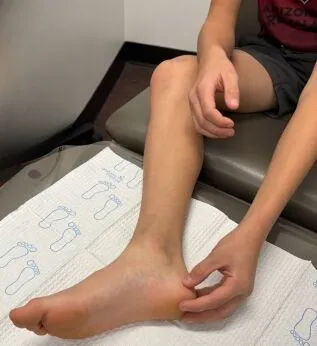
- Tenderness when the doctor squeezes the sides of the heel (“The Squeeze Test”).
- Often affects both heels (bilateral), but one side may be worse.
How to Identify Sever’s Disease
The Squeeze Test
3-Step Test:
- Gently squeeze both sides of your child’s heel.
- The child will have pain often withdrawing their foot as you apply pressure.
- Pain at the growth plate = a key sign of Sever’s disease.
If this test is painful, especially if your child limps or avoids activity, schedule an evaluation.
- The diagnosis is primarily (based on history and physical exam).
- X-rays cannot diagnose severs: X-rays are typically normal for Sever’s and are used to rule out other serious conditions (like a fracture, stress fracture, or bone cyst, coalitions, or altered anatomy).
- However, in severe cases of Sever’s there can be radiographic signs of bone activity around the growth plate called fissuring.
Your Child's Visit - What to expect
Our pediatric sever’s disease evaluations are:
- Gentle and child-friendly
- Based on age, activity level, and symptoms
- Focused on function—not just appearance
This visit will include:
- The doctor actively diagnosing
- A brace will be provided
- Our certified medical assistants will cast your child for their custom orthotic
- Our insurance coordinator will discuss your billing options
Parents are fully involved in the discussion and decision-making. Our goal is to ensure at the end of appointment you have the following:
- An accurate diagnosis of your child’s foot condition, or at least a list of possible differentials
- Understanding of this diagnosis
- Understanding of ALL available treatment options
It is often encouraged to record this initial encounter as the amount of information can feel overwhelming.
How Sever's condition is evaluated in office
Acute Vs. Chronic

Acute Vs Chronic Why it matters?
Sever’s disease may present acutely or chronically & identifying the correct form is key to effective treatment. Misdiagnosis is common.
acute vs chronic treatment
While both types of Sever’s condition aim to reduce pain and decrease pressure on the heel growth plate, the treatment intensity is very different. Acute Sever’s responds well to basic home care, while Chronic Sever’s requires structured, specialist-guided treatment such as the Mikki Device™ orthotic.
Onset of Pain | Sudden flare-up, often linked to a recent increase in activity (e.g., starting a new sports season). | Ongoing, persistent pain that has been present for several weeks, months or sometimes years. |
Squeeze Test | Mild response and only present immediately after the activity for 1-2 hours. | Strong response and present when the child wakes up to when they go to bed. |
Severity of Pain | Typically milder; a child may limp only after activity Pain is intermittent. | More severe; pain is often constant, affecting the child even when they are not active. May lead to a pronounced limp or consistent altered gait, mostly due to compensation. |
Response to Rest | Responds very well to a few days of rest, ice, NSAID’s and basic over-the-counter (OTC) heel cups. | Does NOT fully resolve with simple rest, ice, NSAID’s. Pain quickly returns upon resuming activity. |
Underlying Issue | A temporary inflammatory flare-up of the growth plate due to an isolated event or rapid load change. | Indicates a deeper bone injury to the heel growth plate, uncorrected biomechanical issue. |
| Need for Specialist | Generally, it does not require specialist care; it can be managed at home. The condition resolves in days. | Requires specialist care (comprehensive assessment and customized treatment) Mikki Device Orthotic management |
Acute Sever's Condition (Short-Term Flare-Up)
Goal: Calm inflammation quickly and return the child to activity safely.
Recommended First-Line Care:
- Rest & Activity Modification: Pause or reduce running and jumping until pain improves.
- Ice Therapy: 15–20 minutes, 2–3 times daily, especially after activity.
- NSAIDs: Ibuprofen or similar for pain relief (not to play through pain).
- Heel Support: Over-the-counter silicone/gel heel cups in all shoes to cushion and slightly elevate the heel.
- Daily Stretching: Simple calf and Achilles stretching to reduce tension on the growth plate.
- Pediatric Night Brace: Light stretch to achilles tendon. Traction to calcaneal growth plate, 20-30% improvement in symptoms within 1-2 days of use.
Typical Outcome:
Most children improve within 2–7 days with consistent conservative care.
Chronic Sever's Condition
(Persistent Pain)
Non-Responding Acute Sever's Treatments
Key Sign: Heel pain during the Squeeze Test even without recent sports activity → indicates a deeper growth plate bone injury. And of course failure of basic acute severs care.
Why Chronic Cases Need More Care:
The growth plate has become overloaded, injured and stressed. Simple rest/ice, stretching, physical therapy will not resolve the underlying bio-mechanical stress.
Recommended Gold Standard Treatment
Custom Orthotics (Primary Solution)
The biggest differentiator, Chronic cases rarely improve with OTC inserts.
Custom orthotics (like the Mikki Device™ orthotic) are designed to:
- Remove pressure from the injured heel growth plate
- Redistribute weight across the foot
- Correct underlying issues (flat feet, pronation, high arches)
- Provide superior support and cushioning
Success Rate: 95% success with resolution, with 50–70% relief in a matter of weeks.

- 50–70% pain relief in 2 weeks
- 70+% pain relief by week 4 with consistent use
- 95% success rate in chronic cases
How the mikki Device Orthotic treats chronic sever's Condition
The MIKKI DEVICE™ is a custom- molded pediatric orthotic designed to redistribute pressure away from the injured growth plate so it can heal properly.
- Custom-molded to your child’s foot shape.
- Custom modification to the heel cup, creating a pocket that removes pressure from the injured heel growth plate. (Without this modification in your child’s orthotic there will likely be minimal to NO response with other orthotic designs.
- Corrects pronation, flat feet, or high arches contributing to pain.
- Works in everyday shoes and cleats.
- Often paired with a nighttime splint for improved recovery.
Chronic sever's - what every parent should know
Key Points:
- Acute vs Chronic – are NOT the same conditions and must be treated differently.
- Chronic – Ongoing heel pain that seems to fail basic treatment protocols.
- Common in “ground and pound” sports like soccer + gymnastics, football, basketball.
- Chronic sever’s often creates a lot of compensatory pain as the child alters their gait. This can be confusing and delay the proper diagnosis.
- Caused by repetitive stress to the calcaneal heel bone, over-loaded growth plate.
- Simple rest, ice, and PT often fail because the injury is to the bone, not soft tissue.
Max's Journey
In This Video You’ll Learn:
- Why Sever’s is the #1 heel pain in active kids ages 7–14
- How the Mikki Device™ off-loads the growth plate
- What the fitting process looks like
- How long recovery takes
- Why Max’s dad recommends seeing a pediatric foot specialist first
- Connect with other parents on sever’s disease
- Ask Questions about sever’s disease
- Get expert guidance from pediatric podiatrist Dr. Jarman
Children’s heel pain is different from adult heel pain and must be Treated Differently.

Osgood-Schlatter disease is caused by the same growth-plate mechanism as Sever’s. See how they’re connected
Success stories
Click Any Card To See The Full Story & Video

Gracie’s Brave Story of Her Battle with Sever’s Disease

Meet Jackson - The Power of a Proper Custom Shoe Orthotic
Meet Ryan - Heel Pain & Severs Disease Treatment Story
Meet Nicholas - No More Sever's Disease!
Frequently Asked Questions
Parents often have similar questions when their child is dealing with heel pain. Here are answers to some of the most common concerns about Sever’s condition.
What is Sever's disease?
Sever's disease — also called calcaneal apophysitis — is the most common cause of heel pain in active children ages 7 to 14. It happens when the growth plate at the back of the heel becomes irritated from sports, running, rapid growth, or injury. It's a specific bone injury, not just soreness, and it's something we diagnose every day.
Is Sever's disease the same thing as growing pains?
No. General "growing pains" usually show up as a dull ache in both legs at night. Sever's disease is a specific injury to the heel's growth plate that causes sharp pain triggered by physical activity and direct pressure, and it causes children to guard how they walk, run, and play. Telling the two apart matters because it determines whether your child needs treatment to recover properly.
What causes Sever's disease?
Common contributing factors include:
- Direct injury to the heel growth plate
- Rapid growth spurts (ages 7–14)
- High-impact sports (soccer, football, basketball, running, gymnastics, dance)
- Flat feet, high arches, or pronated feet
- A tight Achilles tendon
- Extra weight increasing heel pressure
- Leg length differences
- Hard playing surfaces and unsupportive shoes or cleats
What are the symptoms of Sever's disease?
Common symptoms include pain localized to the back and sides of the heel that worsens with activity (especially running or jumping) and improves with rest. Children may walk on the outside of their feet, rock onto the balls of their feet, limp, or walk on tiptoes to avoid a heel strike. Tenderness when the heel is squeezed from the sides is a key sign, and both heels are often affected, though one side may be worse.
What is the "squeeze test"?
It's a simple, 3-step way to help identify Sever's disease: we gently squeeze both sides of your child's heel, and if it's Sever's, your child will typically feel pain and may withdraw their foot. Pain right at the growth plate is a key sign of the condition. If this test is painful — especially if your child limps or avoids activity afterward — it's a good idea to schedule an evaluation.
Will my child need an X-ray?
Sever's disease is diagnosed primarily through history and physical exam, not X-rays — X-rays are typically normal for Sever's. We use them to rule out other, more serious conditions like a fracture, stress fracture, bone cyst, coalition, or altered anatomy. In more severe cases, X-rays can sometimes show signs of bone activity around the growth plate called fissuring.
What's the difference between acute and chronic Sever's disease?
Both aim to reduce pain and pressure on the heel growth plate, but they're treated very differently, and misdiagnosis is common. Acute Sever's is a sudden flare-up, often linked to a recent jump in activity — pain is typically milder, shows up mainly after activity, and responds well to a few days of rest, ice, and NSAIDs. Chronic Sever's is ongoing pain that's been present for weeks, months, or longer, is often constant rather than intermittent, doesn't fully resolve with simple rest and ice, and points to a deeper growth plate injury that needs specialist-guided treatment.
How is acute Sever's disease treated?
The goal is to calm inflammation quickly and safely return your child to activity. First-line care typically includes resting or reducing running and jumping, ice for 15–20 minutes two to three times daily, NSAIDs like ibuprofen for pain relief, over-the-counter silicone or gel heel cups, daily calf and Achilles stretching, and sometimes a pediatric night brace. Most children improve within 2 to 7 days of consistent conservative care.
Why doesn't rest and ice work for chronic Sever's disease?
A key sign of chronic Sever's is heel pain on the squeeze test even without recent sports activity, along with failure of basic acute-care measures. In these cases, the growth plate has become overloaded, injured, and stressed — this is a bone injury, not a soft-tissue one, so simple rest, ice, or physical therapy alone typically won't resolve the underlying biomechanical stress.
What is the Mikki Device™, and how does it help?
The Mikki Device™ is a custom-molded pediatric orthotic designed to redistribute pressure away from the injured heel growth plate so it can heal properly. It's custom-molded to your child's foot, includes a specific heel cup modification that creates a pocket removing pressure from the injured area, corrects contributing issues like pronation, flat feet, or high arches, and works in everyday shoes and cleats. It's often paired with a nighttime splint for improved recovery. Without the specific heel cup modification, other orthotic designs are likely to give minimal to no response.
How effective is treatment for chronic Sever's disease?
With the Mikki Device™, many children see 50–70% pain relief within 2 weeks and 70%+ relief by week 4 with consistent use, with a 95% overall success rate in resolving chronic cases. Custom orthotics are the primary solution for chronic Sever's, since chronic cases rarely improve with over-the-counter inserts alone.
Is Sever's disease different from plantar fasciitis?
Yes. Children's heel pain is different from adult heel pain and needs to be treated differently — Sever's disease involves the heel's growth plate, which is unique to growing children, while plantar fasciitis involves the plantar fascia soft tissue. Getting the right diagnosis matters for getting the right treatment.
What happens during a Sever's disease evaluation?
Evaluations are gentle, child-friendly, and focused on function rather than just appearance. During the visit, the doctor makes an active diagnosis, a brace may be provided, our certified medical assistants can cast your child for a custom orthotic, and our insurance coordinator will discuss billing options. You'll leave with an accurate diagnosis (or a list of possible differentials), a clear understanding of that diagnosis, and a full picture of the available treatment options.