



When the small bones under the big toe joint (called sesamoids) become irritated or inflamed, it causes a painful condition known as sesamoiditis. This problem can affect active kids who run, jump, or play sports.
Sesamoiditis happens when the tendons and bones beneath the big toe joint become overused or strained. These tiny sesamoid bones help with balance and push-off during walking or running. Repeated stress or tight footwear can cause inflammation and pain in the ball of the foot.
Pain under the big toe joint
Swelling or redness on the ball of the foot
Pain that worsens when walking, running, or jumping
Trouble bending or straightening the big toe
Sesamoiditis often develops in children who:
Play sports like dance, basketball, or soccer
Wear shoes with minimal padding or high-pressure soles
Have high arches or an abnormal gait pattern
Recently increased physical activity or training intensity
Dr. Mikkel Jarman performs a detailed foot exam, gait analysis, and may use digital X-rays to confirm the diagnosis and rule out fractures or other conditions.
Early treatment helps prevent long-term pain. Our pediatric foot specialists may recommend:
Rest and activity modification
Supportive or cushioned shoes
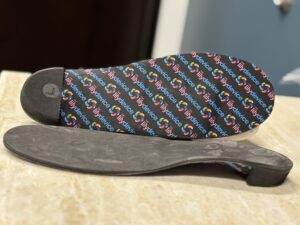
Custom pediatric orthotics to offload pressure
Physical therapy and stretching exercises
Anti-inflammatory treatments or immobilization when needed
Most children recover fully with proper rest and supportive footwear. Custom orthotics and gradual return to activity help prevent recurrence of sesamoiditis.
Not everything is sesamoiditis. Some differentials can be turf toe, hallux limitus, metatarsalgia. Initially treated similarly with a Lilly device.
If your child complains of pain beneath the big toe joint that doesn’t improve in a few days, schedule an evaluation. Early diagnosis ensures faster recovery and helps your child return to activities pain-free.
We use cookies to improve your experience on our site. By using our site, you consent to cookies.
Manage your cookie preferences below:
Essential cookies enable basic functions and are necessary for the proper function of the website.
These cookies are needed for adding comments on this website.
Google reCAPTCHA helps protect websites from spam and abuse by verifying user interactions through challenges.
Google Tag Manager simplifies the management of marketing tags on your website without code changes.
Statistics cookies collect information anonymously. This information helps us understand how visitors use our website.
Google Analytics is a powerful tool that tracks and analyzes website traffic for informed marketing decisions.
Service URL: policies.google.com (opens in a new window)
Marketing cookies are used to follow visitors to websites. The intention is to show ads that are relevant and engaging to the individual user.
Facebook Pixel is a web analytics service that tracks and reports website traffic.
Service URL: www.facebook.com (opens in a new window)
store ad click information when visitor arrives
Google Maps is a web mapping service providing satellite imagery, real-time navigation, and location-based information.
Service URL: policies.google.com (opens in a new window)
You can find more information in our Cookie Policy and .
Typically includes stretching, bracing, and physical therapy to support healthy gait development.
May include a broader range of options, including surgical evaluation if conservative treatment hasn’t resolved the pattern.