Toe Walking in Children (Pediatric Equinus)
Causes, Symptoms, and Treatment
What is Toe Walking in Children?
Toe walking is a gait pattern where a child walks on their toes or the balls of their feet without their heels touching the ground. This can be normal in toddlers but may indicate an underlying condition if it persists beyond age three.
In children 3 years and older walking on tiptoes may not be normal and could be associated with a neurological immaturity or medical condition.
Fortunately, over 90% of these cases can be treated with conservative treatment options and surgery is not required.
In the following video, Dr. Mikkel Jarman discusses the impact toe walking has on our kids.
CHRONIC TOE WALKING | MIA'S JOURNEY SUCCESS STORY
Common Causes of Toe Walking in Children
Idiopathic Toe Walking (ITW)
Idiopathic Toe Walking is a condition where a child over the age of three continues to walk on their toes without any identifiable neurological, orthopedic, or mental illness. This affects 7-24% of children and may be due to a habit or an undiagnosed physical anomaly. Over time, ITW can lead to muscle tightness, improper bone growth, and joint discomfort if not addressed.
Neurological Disorders
Conditions such as cerebral palsy or muscular dystrophy can cause toe walking due to muscle spasticity or weakness. Cerebral palsy often results in increased muscle tone, leading to a shortened Achilles tendon and toe walking. Muscular dystrophy, a group of genetic diseases, weakens muscles over time, contributing to gait abnormalities.
Developmental Disorders
Autism spectrum disorders (ASD) can be associated with toe walking. Children with ASD might exhibit this gait pattern due to sensory processing issues or motor development delays.
However, due to their developmental condition it is often mistakenly ignored in these children, as more often they actually have a physical abnormality that needs surgery.
Physical Conditions
- Shortened Achilles Tendon: A congenitally short Achilles tendon restricts the heel from touching the ground, necessitating surgical intervention in severe cases.
- Heel Pain: Conditions like Sever’s disease cause heel pain, leading children to walk on their toes to avoid discomfort.
- Musculoskeletal Issues: Other structural abnormalities, such as flat feet or tight calf muscles, can contribute to a toe-walking gait.
Is Your Child’s Toe Walking Neurological or Structural?
Toe walking in children can stem from two very different causes: neurological and structural. But how do you know which one your child is experiencing?
In this video, Dr. Mikkel Jarman, a leading expert in pediatric foot and ankle care, breaks down the key differences between neurological and structural toe walking.
Dr. Jarman explains how neurological toe walking is related to conditions such as cerebral palsy, muscular dystrophy, and other disorders that affect muscle control. On the other hand, structural toe walking is caused by physical restrictions, like a short Achilles tendon or other anatomical variations. Understanding these differences is crucial for ensuring that your child receives the correct treatment.
When toe walking becomes a problem: Symptoms and Diagnosis
Symptoms
Toe walking in children is characterized by walking on the toes or balls of the feet without the heels touching the ground.
- Walking on toes or balls of feet
- Lack of heel contact with the ground
- Discomfort or pain in knees, hips, or lower back
- Unnatural gait and posture
- Tightness in the calf muscles
Diagnosis
Silfverskiöld Test
The Silfverskiöld Test, which evaluates ankle mobility in different knee positions to distinguish between neurological and structural causes of toe walking. This simple test can even be performed at home.
Learn how to perform the Silfverskiöld Test at home »
Virtual Consultations with Dr. Jarman
Dr. Jarman offers virtual consultations, providing expert guidance to families, whether local or out of state.
Treatment for toe walking in children
Conservative Treatments
Physical Therapy
Physical therapy focuses on exercises designed to stretch and strengthen the Achilles tendon and calf muscles. This helps improve flexibility and promote a normal gait pattern. Therapists may use techniques such as manual stretching, functional exercises, and gait training to address muscle imbalances and enhance motor skills.
Bracing and Orthotics
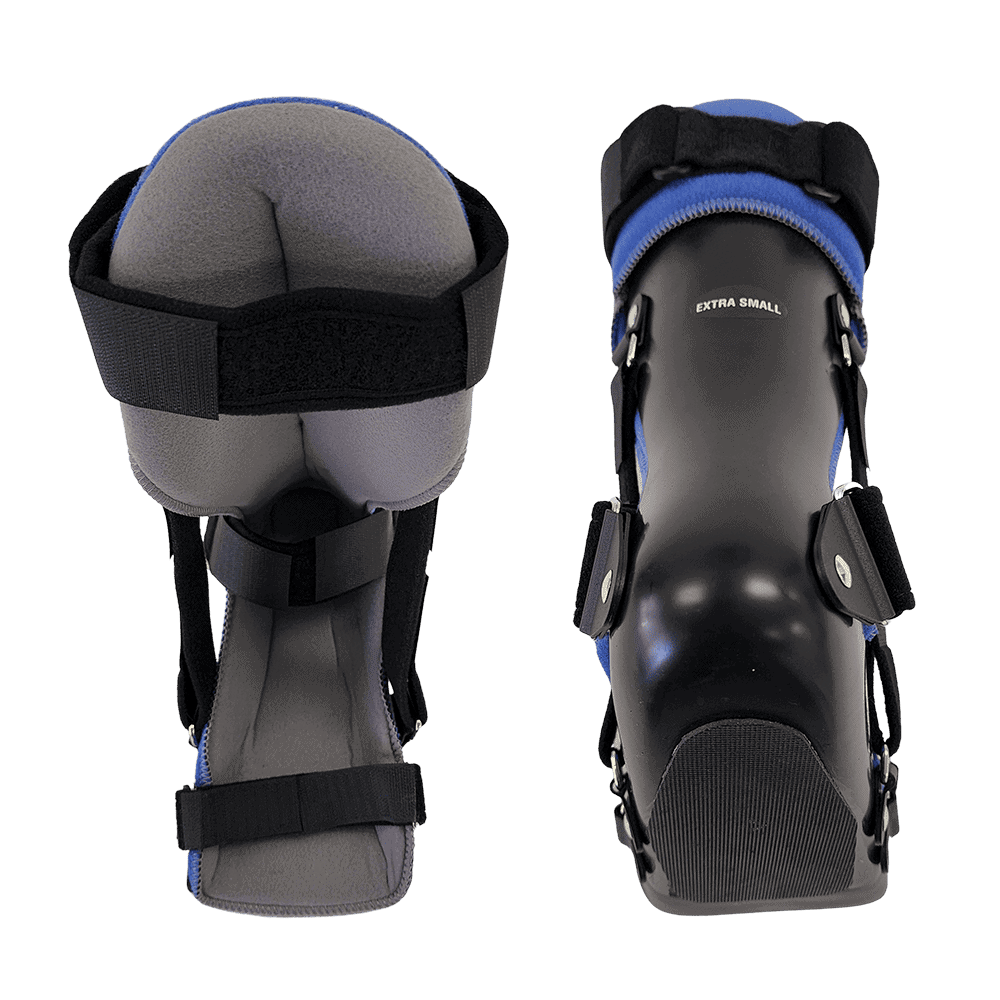
Orthotics and braces like the Toe Walking Brace are used to support proper foot alignment and encourage heel-to-toe walking. These devices are often custom-fitted to ensure comfort and effectiveness. They work by gently correcting the foot’s position, reducing muscle strain, and promoting a normal gait during walking.
AFO’s and SMO’s
An AFO, or Ankle-Foot Orthosis, is a brace that supports the ankle and foot, helping to correct alignment and improve walking patterns in children with conditions like toe walking. SMOs, or Supramalleolar Orthoses, are similar braces but are shorter and provide support just above the ankle, stabilizing the foot while allowing more mobility than AFOs. Both AFOs and SMOs are commonly used in pediatric orthotics to manage various foot and ankle conditions by improving stability and function.
Toe Walking Brace by Pediatric Orthotics
This brace is an Ankle-Foot Orthosis (AFO), and is custom-made to provide optimal support for children who struggle with toe walking, ensuring that the foot remains in a neutral position to promote proper heel-to-toe walking mechanics.
Dr. Jarman Treats Cameron's Chronic Toe Walking
Cameron began toe walking at around the age of two. After following the foot physical therapies and exercises recommended by their pediatrician with little to no improvement, she decided something needed to be done.
When surgery may be needed
Most children with toe walking improve with conservative treatment such as stretching, orthotics, or physical therapy. In rare cases, a procedure called Achilles Tendon Lengthening (ATL) may be recommended.
Achilles Tendon Lengthening is a surgical procedure performed when conservative treatments for toe walking fail. Dr. Jarman, with over a decade of experience, routinely performs this surgery every Wednesday. This procedure involves lengthening the Achilles tendon to allow for normal foot positioning and gait.
Dr. Jarman's Toe Walking Treatment Success Stories
Out of state? Schedule A Virtual Consultation with Dr. Jarman to asses your child's toe walking
JOIN OUR FACEBOOK COMMUNITY FOR TOE WALKING SUPPORT!

You’re not alone—many parents have questions and concerns about toe walking, and we’re here to help! Our Facebook group is a welcoming space where parents, caregivers, and medical professionals from around the world come together to share experiences, ask questions, and find solutions for children who walk on their toes.
Toe Walking FAQ's
Toe walking can be caused by idiopathic reasons (habitual), neurological disorders (e.g., cerebral palsy), developmental disorders (e.g., autism), or physical conditions like a shortened Achilles tendon.
Toe walking is common in toddlers under 2 but typically resolves by age 3-4. Persistent toe walking beyond 4-5 years old often requires medical evaluation.
Not always. It can be a normal part of early walking development but should be assessed if persistent to rule out underlying conditions.
Diagnosis involves a medical history, physical examination, gait analysis, and possibly neurological and orthopedic evaluations. Dr. Jarman can often diagnose toe walking through a virtual consultation.
ITW is toe walking without an identifiable cause, affecting 7-24% of children. It is diagnosed when no neurological, orthopedic, or mental illness is present.
Conservative treatments include physical therapy, bracing and orthotics, and casting to gradually correct foot positioning.
ATL is a surgical procedure to lengthen the Achilles tendon, allowing the foot to achieve a normal position and gait.
Recovery involves an initial cast for two weeks, transitioning to a walking boot for two weeks, and physical therapy starting six weeks post-surgery.
Toe walking is 100% treatable, with many children responding well to conservative treatments or surgery if necessary.
Your Child's Feet Are Designed For Life